Reliable Solutions for Lifting and Supporting Engines and Transmissions
Engine hoists and transmission jacks form the backbone of safe and efficient heavy-component handling in automotive and mechanical workshops. Designed to lift, hold, and maneuver engines, gearboxes, and other substantial vehicle parts, these tools ensure precise operations without placing excessive physical strain on the mechanic. An engine hoist, often hydraulic, uses a boom and chain arrangement to lift engines out of their mounts, enabling repair, overhaul, or replacement with minimal vehicle disassembly. Transmission jacks, by contrast, are built to support and position gearboxes, allowing controlled removal and installation even in tight undercar spaces.

These devices are not only about lifting power; they are about control, safety, and adaptability. Adjustable arms, rotating mounts, and stable bases ensure that the load remains secure while allowing optimal access from multiple angles. Their robust steel construction provides durability for repeated use in demanding environments. Whether in a large automotive service center or a home garage, they facilitate tasks that would otherwise be time-consuming, risky, or impossible without mechanical assistance. By combining engineered strength with fine precision, engine hoists and transmission jacks enable mechanics to work more effectively, maintain high safety standards, and achieve accuracy in both routine maintenance and complex mechanical projects.

Engine Mounting Support for Heavy-Duty Applications
Among the key tools in this category is the engine stand with a 900 kg capacity. This robust stand is designed to securely hold engines after removal, allowing mechanics to work on them at a comfortable height and with unobstructed access. Its rotating head enables the engine to be turned and locked into different positions, facilitating comprehensive inspection and repair from all angles. The heavy-duty frame ensures stability even with large, heavy engines, and the swivel caster wheels make it easy to move the stand around the workshop.
This equipment is particularly valuable for rebuilding engines, replacing internal components, or conducting thorough cleaning. Its design prioritizes user safety, offering secure mounting points and durable construction that can withstand repeated heavy use. The 900 kg capacity makes it suitable for a wide range of engines, from smaller passenger cars to large commercial vehicle engines, ensuring versatility and long-term reliability for professional mechanics.
In both professional workshops and home garages, engine hoists, transmission jacks, and related lifting equipment are indispensable for safely handling heavy vehicle components. They are most commonly used during major repairs, such as engine replacements, where precise lifting and positioning are essential to avoid damage to surrounding structures. An engine hoist enables the safe removal of the engine block without dismantling large portions of the vehicle, saving time and minimizing disruption. Transmission jacks are equally important when servicing or replacing gearboxes, as they provide the stability and fine control needed to align the transmission with the engine during installation.
Beyond standard repairs, these tools are widely used in restoration projects, where engines and gearboxes are often removed for complete overhauls. They also play a crucial role in motorsports, where quick drivetrain swaps may be required. In addition, lifting equipment can be adapted for non-automotive tasks, such as moving heavy machinery parts, pumps, or industrial motors. Their robust construction, adjustable features, and controlled lifting mechanisms ensure both safety and efficiency. For workshops of any size, these devices are not only a convenience but also a critical safety measure, significantly reducing the physical strain on mechanics while improving the precision and quality of repair work.
Understanding the Difference Between a Gantry Crane and an Engine Hoist
While both gantry cranes and engine hoists are designed for lifting heavy loads, their structure, mobility, and typical applications differ significantly. A gantry crane consists of a large, rigid frame with two upright supports and a horizontal beam, often mounted on wheels for limited mobility. It uses a trolley and hoist mechanism that can travel along the beam, enabling the load to be moved horizontally as well as vertically. Gantry cranes are commonly found in industrial workshops, shipyards, and warehouses, where large and heavy objects need to be lifted and shifted over a broad working area.
An engine hoist, also called a shop crane, is a more compact and mobile lifting device, specifically engineered for removing and installing engines in vehicles. It typically uses a hydraulic jack to raise a pivoting boom fitted with a hook and chain. Engine hoists are ideal for use in smaller workshops and garages, where maneuverability is essential, and lifting tasks are concentrated in one location. They are also designed to fold for storage when not in use.
The key difference lies in scale and flexibility: gantry cranes handle larger, more varied loads across greater distances, while engine hoists offer targeted lifting power and precise positioning for automotive applications.
Hydraulic Gearbox Jack for Versatile Lifting Needs
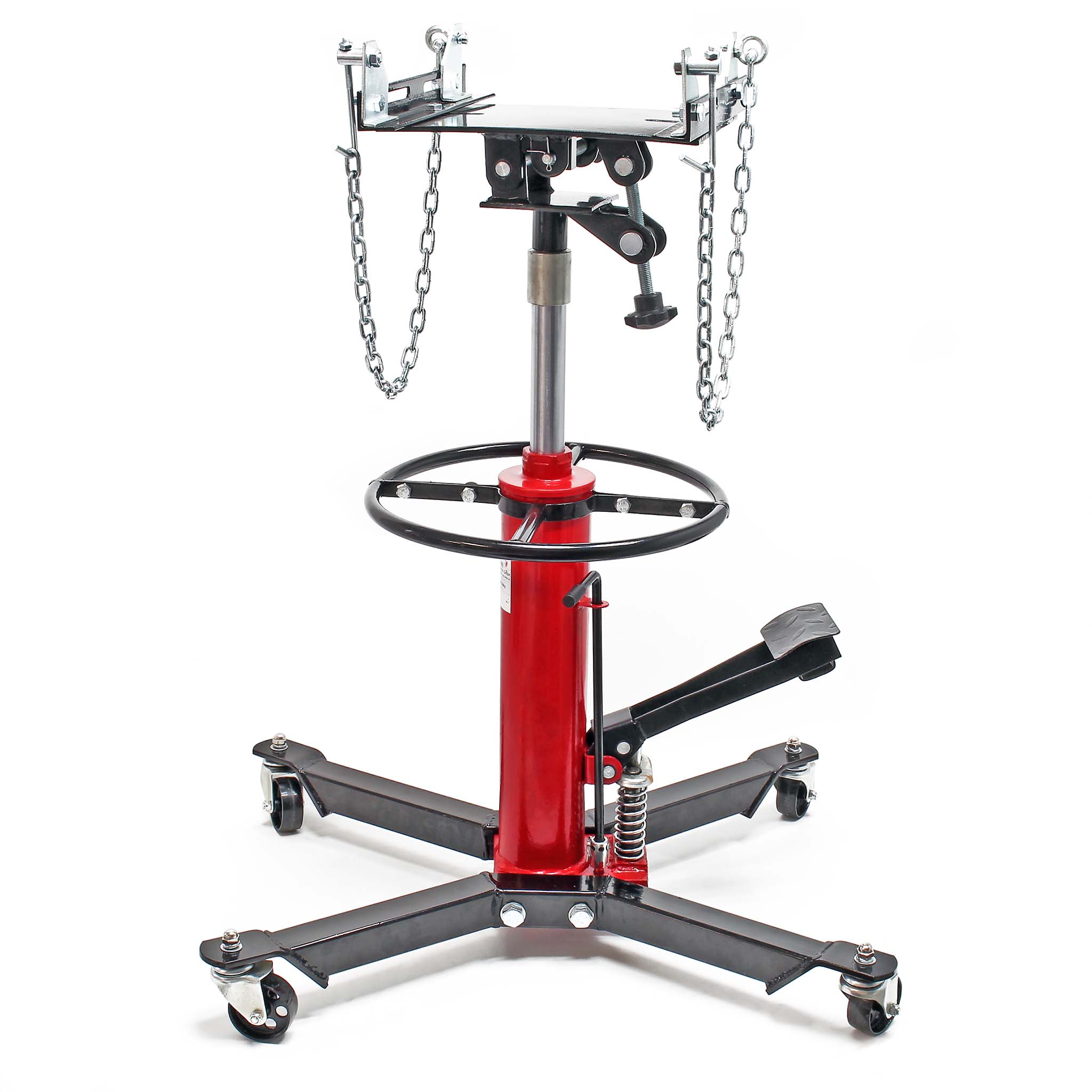
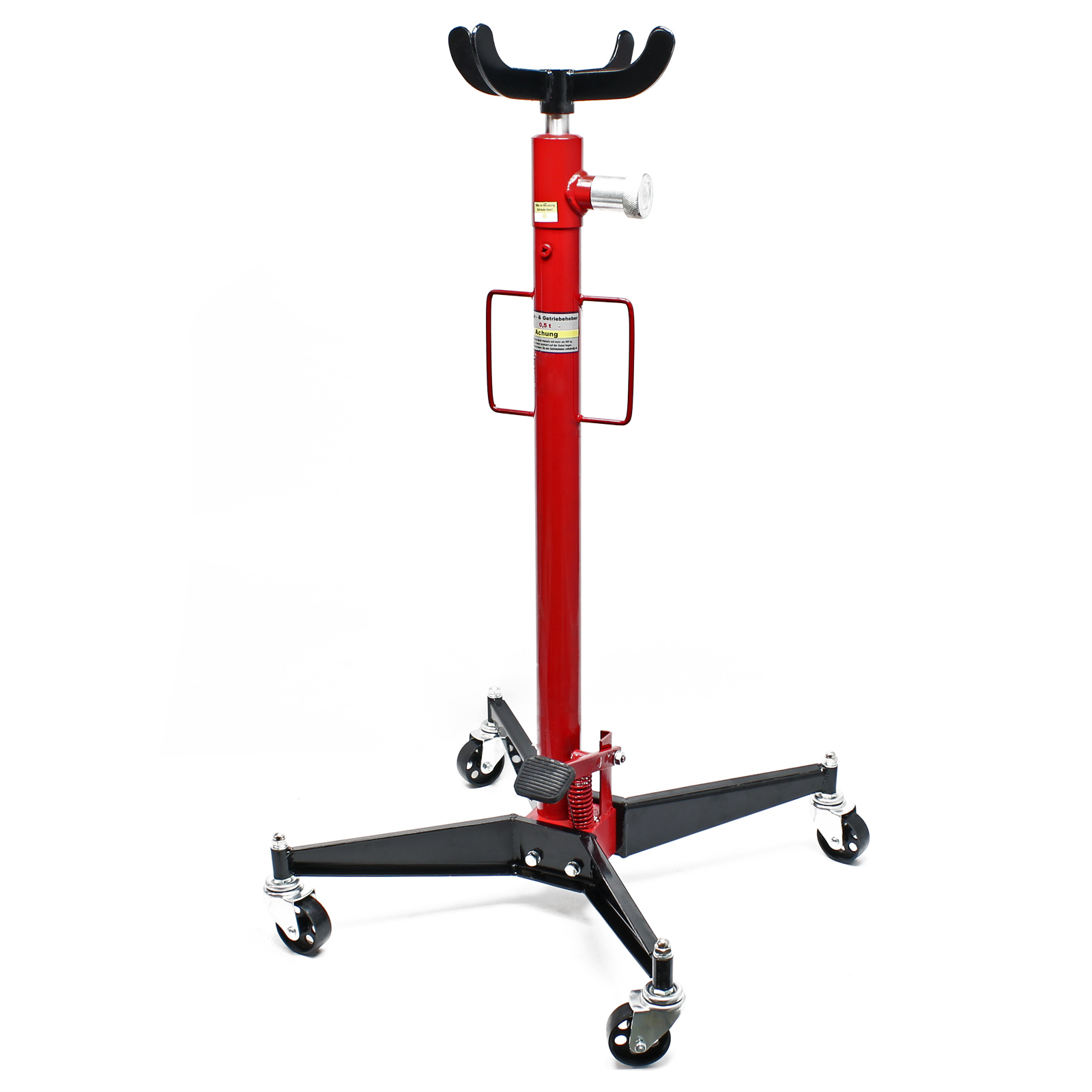
One notable tool in this category is the hydraulic gearbox jack designed for adjustable heights between 110 and 190 cm with a maximum capacity of 500 kg. This type of jack is engineered to support and maneuver transmissions, fuel tanks, and similar components during removal or installation. Its hydraulic system allows smooth and controlled lifting, reducing physical strain and minimizing the risk of sudden movements that could damage components. Many designs include a tilting saddle with securing chains to hold the load firmly in place while adjustments are made.
The adjustable height range makes it adaptable for different vehicle sizes and types, from passenger cars to larger vans or trucks. Swivel casters enable easy repositioning beneath the vehicle, while a broad base ensures stability during operation. This piece of equipment is especially valuable in professional workshops where precision handling of heavy, awkwardly shaped components is required.
What Major Components Must Be Disconnected Before Lifting the Engine?
Before lifting an engine with an engine hoist, it is essential to methodically disconnect several major components to ensure both safety and efficiency. The process begins by disconnecting the battery to eliminate any risk of electrical shorts or sparks. Next, the coolant system must be drained and the radiator, along with its hoses, removed to prevent leaks and provide more working space. The exhaust manifold and related connections should be detached to avoid interference during lifting.
Fuel lines need to be carefully disconnected and sealed to prevent spillage, which could pose a fire hazard. Electrical wiring harnesses linked to sensors, ignition systems, and auxiliary components must be unplugged and labeled for easy reconnection later. If the transmission will remain in the vehicle, the bolts connecting it to the engine must be removed, along with any associated brackets or mounts.
Additionally, the engine mounts themselves must be unbolted only after the engine hoist is securely in place and supporting the engine’s weight. Removing the air intake assembly, belts, and accessories such as the alternator or power steering pump can also make the lifting process smoother. By systematically disconnecting these components, the engine can be lifted safely without damaging surrounding parts or causing alignment issues during reinstallation.

What Bolts to Use to Lift an Engine?
When preparing to lift an engine using an engine hoist, selecting the correct bolts is critical for safety and load security. The bolts must be of high tensile strength, capable of handling the full weight of the engine without risk of stretching or breaking. In most cases, Grade 8 bolts in the imperial system or metric grade 10.9 bolts are recommended, as these provide the necessary durability and shear strength. They should match the specific thread size and pitch of the designated lifting points or threaded holes on the engine block.
The bolts must be long enough to engage the full depth of the threads, ensuring a secure hold, but not so long that they bottom out and fail to clamp properly. Using washers can help distribute the load evenly and prevent damage to the mounting surfaces. It is essential to tighten the bolts to the manufacturer’s specified torque values to prevent loosening during lifting.
Before installation, both bolts and threaded holes should be inspected for signs of wear, corrosion, or stripped threads. Avoid using generic or hardware-store bolts of unknown grade, as they may not meet the necessary load capacity. Correct bolt choice, combined with proper installation, ensures a safe and controlled lifting process.
What Is the Use of Transmission Jack?
A transmission jack is a specialized lifting device designed to support, raise, lower, and maneuver a vehicle’s transmission during removal or installation. Transmissions are typically heavy, awkwardly shaped, and located in confined spaces beneath the vehicle, making them difficult and unsafe to handle manually. The transmission jack solves this challenge by providing a stable platform with adjustable tilt, rotation, and height settings, allowing precise alignment with the engine and mounting points.
Hydraulic transmission jacks use a foot-operated or hand-operated pump to lift the load smoothly, giving the mechanic full control while keeping their hands free for positioning. Many models feature a wide, stable base with swivel casters for easy movement, as well as securing chains or brackets to hold the transmission firmly in place.
In addition to handling gearboxes, transmission jacks are also used for related components such as transfer cases, fuel tanks, and exhaust systems. Their versatility makes them valuable for various undercarriage maintenance tasks. By reducing the physical strain and risk of injury, transmission jacks improve both safety and efficiency in professional workshops and home garages alike. They are an indispensable tool whenever a transmission or similar heavy component needs to be removed, serviced, or installed with precision.

Leaving an engine on a stand for an extended period is possible, but it is generally recommended not to exceed several months. While the stand supports the weight, prolonged storage without periodic rotation of the engine can cause internal components to settle or oil residues to dry out, potentially leading to corrosion or binding.

If an engine must remain on a stand for more than a few weeks, covering it to protect against dust and environmental exposure is advisable. Applying a thin coat of protective oil to exposed metal surfaces can help prevent rust formation, particularly on cylinder walls and crankshaft journals.

Mechanics often rotate the engine periodically while it is on the stand to ensure even distribution of any residual lubrication and to avoid undue stress on mounting points. Proper storage conditions, including moderate temperature and low humidity, extend the safe time an engine can remain on the stand.
Summary of Category Information
Engine hoists, transmission jacks, hydraulic gearbox jacks, and engine stands are vital for safe, efficient vehicle engine and transmission handling. They enable precise lifting, positioning, and securing of heavy components during repair, maintenance, and installation. Each tool in this category is designed to address specific needs, whether lifting an entire engine, supporting a gearbox, or holding an engine securely for extended work.
Proper use of high-strength bolts, safe disconnection of components before lifting, and adherence to safety guidelines are crucial for effective operation. Understanding the distinctions between equipment types, such as gantry cranes and engine hoists, helps ensure the right tool is selected for the task.
These devices are essential in both professional workshops and enthusiast settings, offering versatility, control, and reliability for a wide range of automotive and mechanical projects.