


























































Terrace Construction: Foundation for Durable Outdoor Spaces
Terrace construction is more than laying planks or tiles; it is about creating a durable and secure foundation that will withstand time, weather, and constant use. A terrace must be designed to remain stable and functional, whether it serves as a private retreat, a dining area, or a gathering space. At the core of this stability are terrace deck support pedestal systems, adjustable pedestal supports, and corner support feet, which together ensure that planks, tiles, or stone elements remain level and resistant to structural damage. Unlike traditional solutions, terrace support feet provide flexibility in height adjustment, distribute weight evenly, and reduce direct ground contact, preventing rot or warping of materials.
Adjustable terrace feet are also indispensable on uneven surfaces, where they allow precise leveling without expensive groundwork. This approach combines practicality with reliability, making terrace construction both efficient and adaptable to different environments. A carefully planned system of adjustable deck supports, designed to carry heavy loads while offering fine adjustments, ensures that terraces are not only visually appealing but also structurally safe for long-term use.

Sturdy Corner Support Feet for Demanding Loads
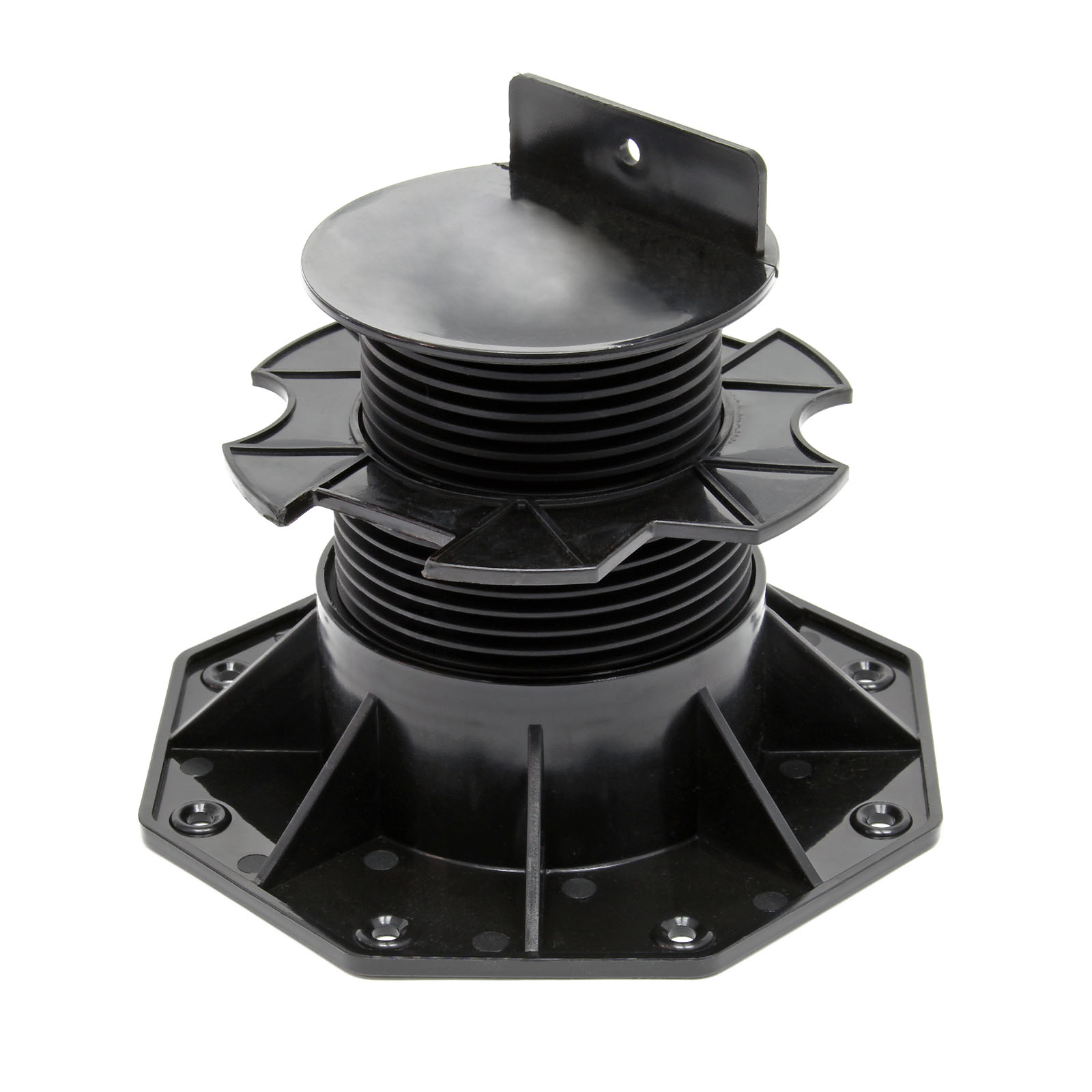
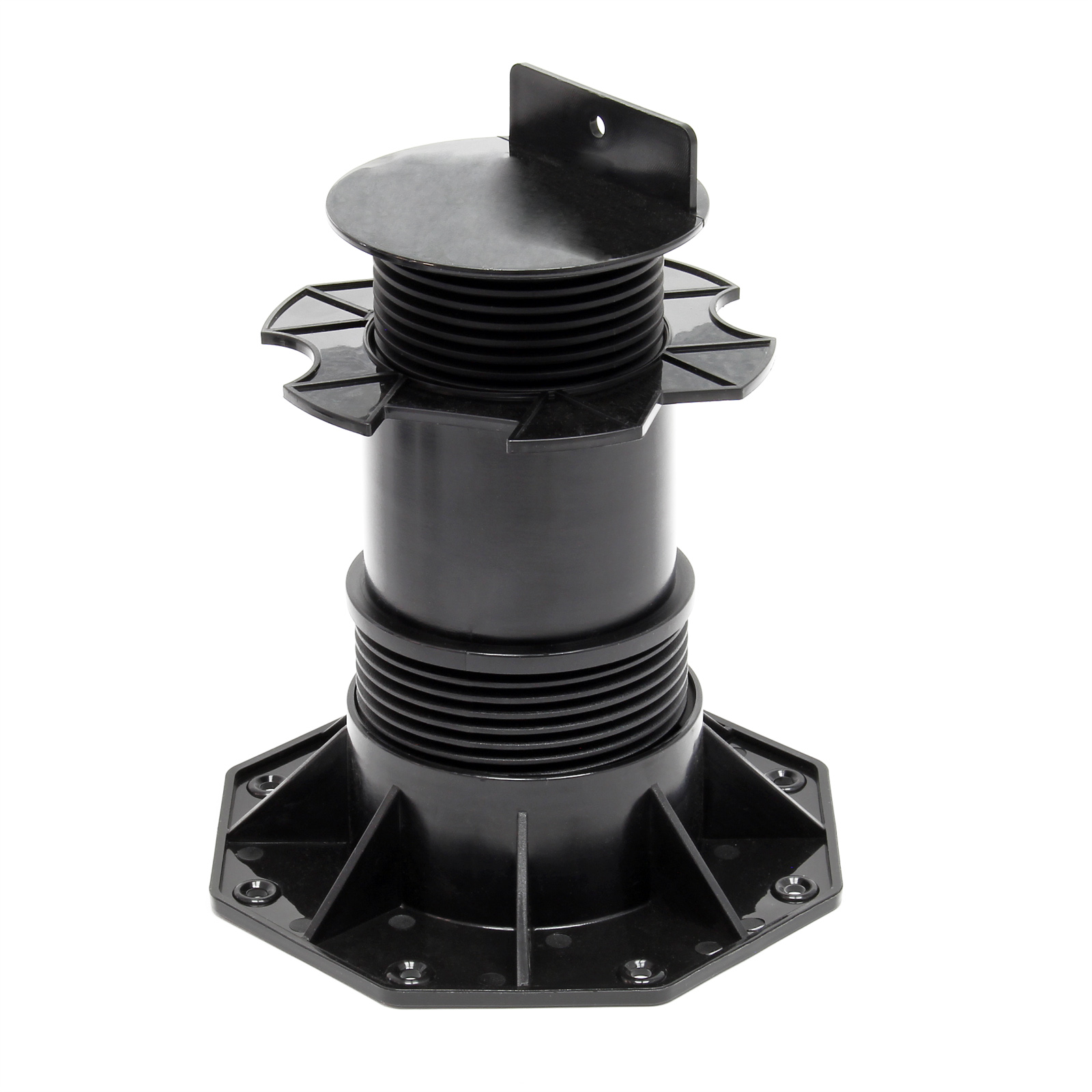
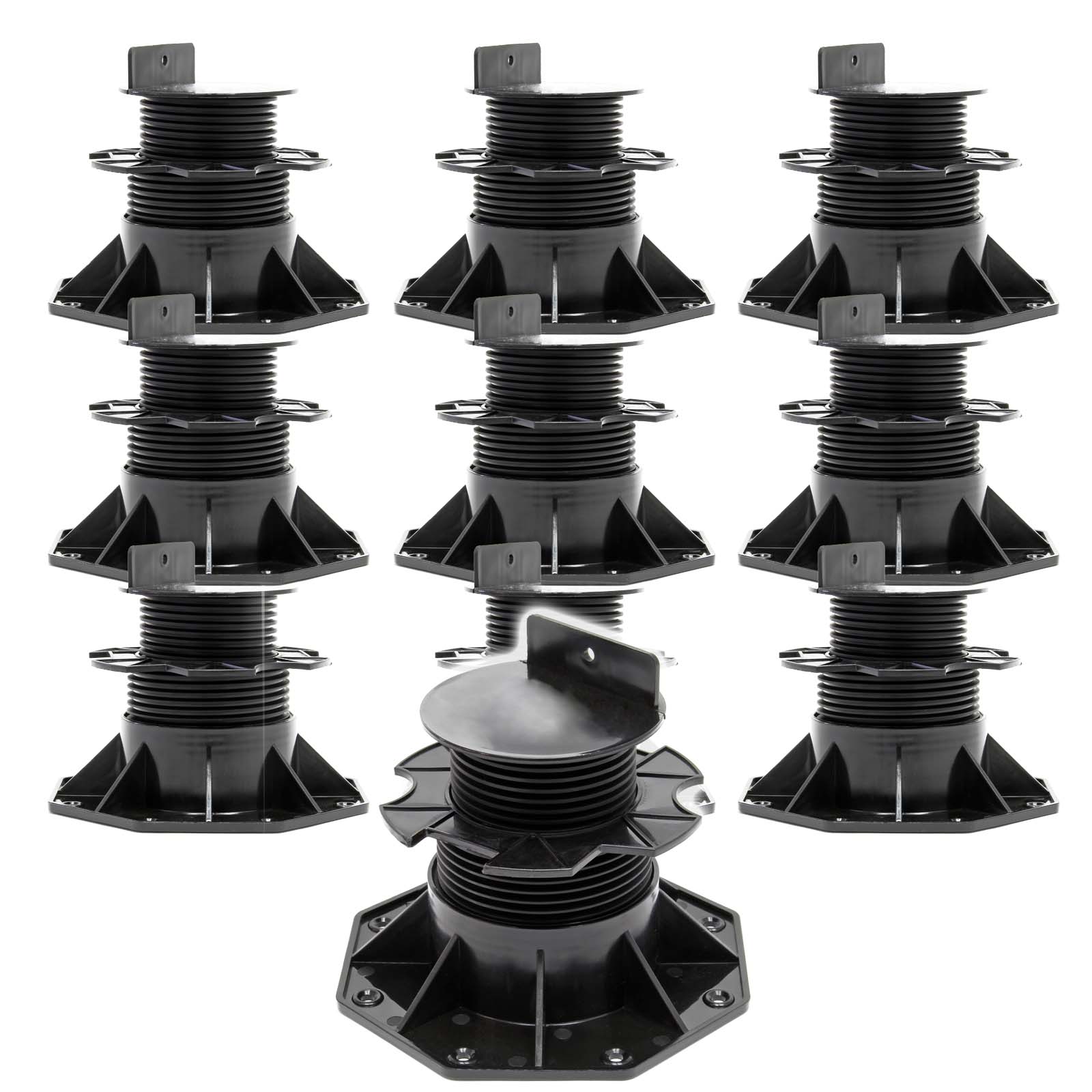
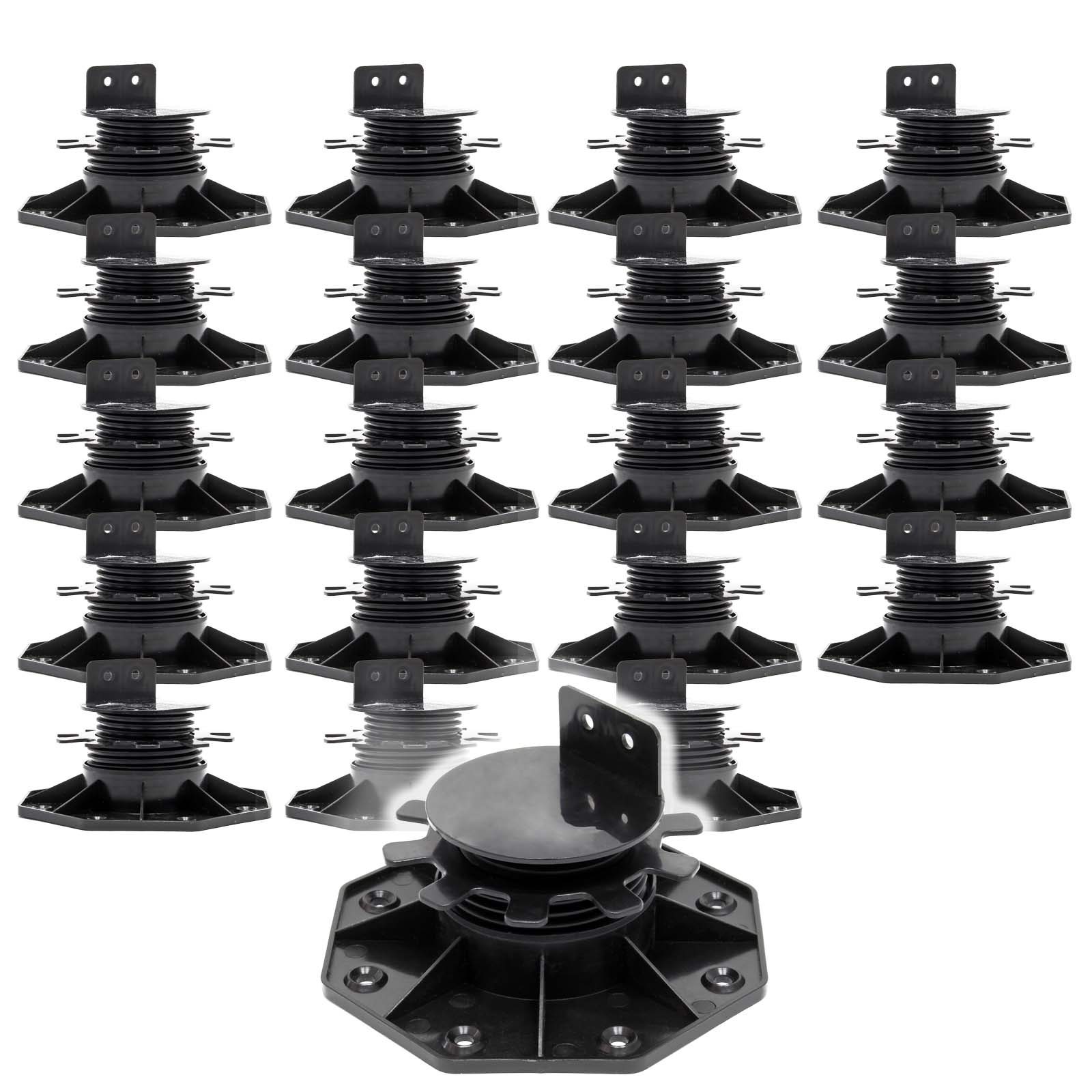
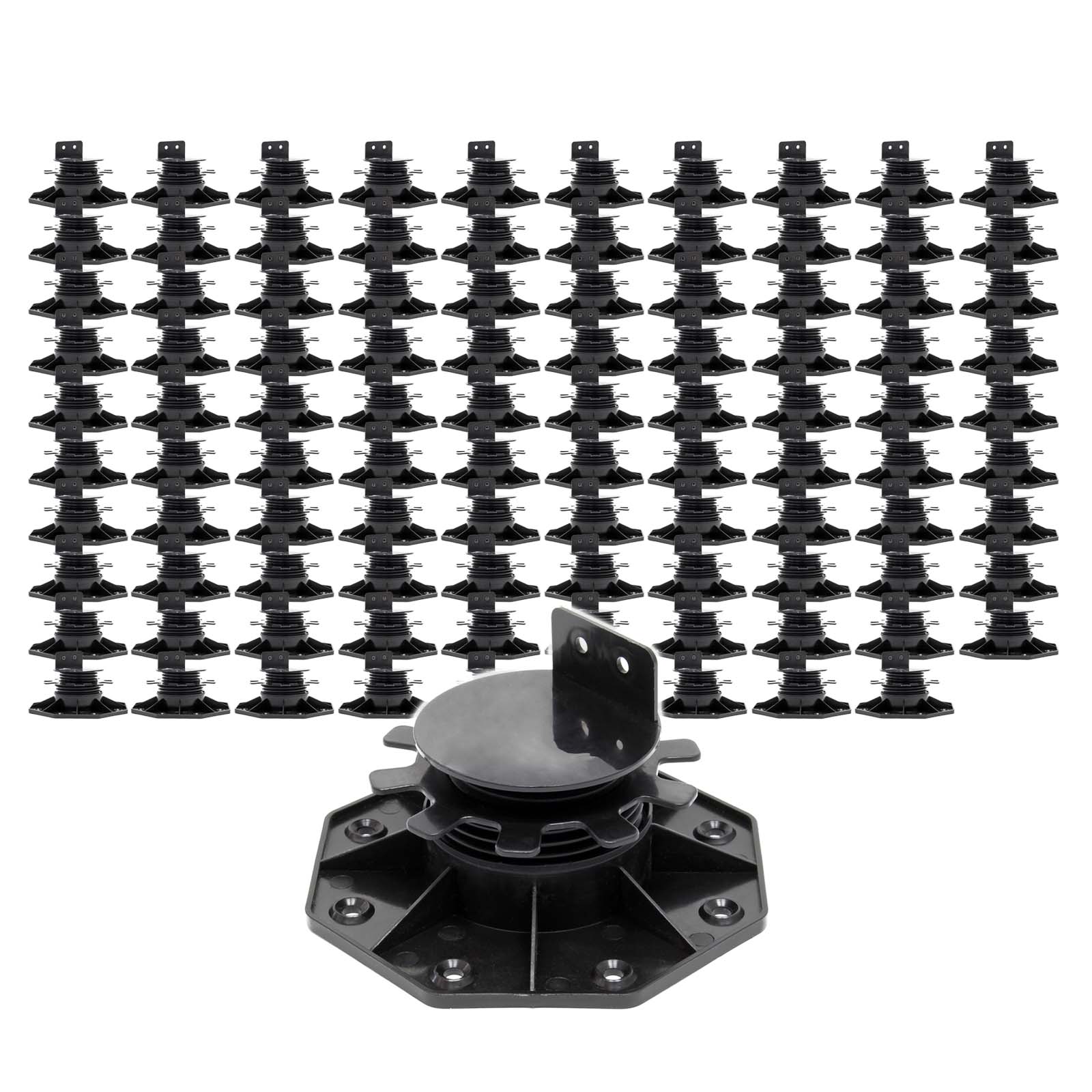
Corner support feet are among the most versatile elements in terrace construction, offering both resilience and adjustability. A set designed to withstand up to 2700 kg while being height-adjustable between 140 and 210 mm illustrates how powerful these supports can be. Such terrace support feet are engineered to stabilize not only central sections but also sensitive areas along borders, corners, and edges where precision is essential. Adjustable pedestal supports of this type ensure that planks or tiles remain perfectly level, even when ground conditions vary significantly. They reduce stress on the surface materials by spreading loads evenly, while their robust structure guarantees long-term durability under daily use.
These adjustable terrace feet make it possible to achieve professional-level results without the need for permanent concrete bases. Particularly in large-scale terrace projects, corner support feet contribute to a smooth installation process, ensuring that each element fits securely and seamlessly into the construction plan. With their reliable strength and adaptability, these components form a crucial part of modern terrace building strategies, combining safety with technical precision to deliver a structurally sound outdoor platform.
Terrace deck support pedestal systems are used wherever outdoor flooring requires stability, adaptability, and long-lasting performance. Adjustable pedestal supports play a central role in private gardens, enabling wooden or composite terraces to be constructed above soil, gravel, or concrete without major groundwork. In urban environments, adjustable terrace feet are crucial for roof terraces, balconies, or courtyards, where weight distribution and limited structural load capacity require lightweight yet stable solutions. Corner support feet are particularly important in transitional spaces and at edges, where they prevent instability and keep terrace planks securely aligned.
In commercial applications, terrace support feet allow large areas to be covered efficiently, whether for restaurants, public plazas, or event platforms. These systems provide ventilation beneath the terrace surface, preventing moisture buildup and prolonging the life of planks or tiles. They also allow rapid adjustments when maintenance or repairs are needed, avoiding costly dismantling. Thanks to their versatility, terrace deck support pedestals are not limited to permanent projects; they are also used in modular constructions, temporary installations, or seasonal outdoor setups. Their ability to adapt to different substrates and design requirements makes them indispensable in both residential and professional terrace construction projects.
How Do Adjustable Deck Supports Work?
Adjustable deck supports function by offering precise vertical adjustments, typically through a threaded or telescopic mechanism. Terrace deck support pedestal systems provide stable platforms on which joists, beams, or tiles can rest, while the adjustable terrace feet distribute weight across the surface below. By turning the adjustment element, builders can raise or lower each support, achieving a perfectly level terrace even when the ground is uneven or sloped. This functionality eliminates the need for heavy plinths or extensive groundwork, streamlining construction without sacrificing safety. Adjustable pedestal supports also improve ventilation under the terrace, which helps prevent moisture accumulation, rot, and mold in wooden structures.
They minimize direct ground contact, ensuring that decking materials have a longer lifespan. In practice, the installation process is straightforward: supports are placed in a grid pattern, adjusted to the desired height, and then topped with joists or slabs. Once aligned, they provide a secure base capable of handling heavy loads and regular use. Whether on a rooftop, in a garden, or on existing concrete, adjustable terrace feet ensure flexibility, precision, and durability. Their design combines ease of installation with technical performance, making them a fundamental component of modern terrace building techniques.
Compact Supports for Low-Rise Terrace Solutions
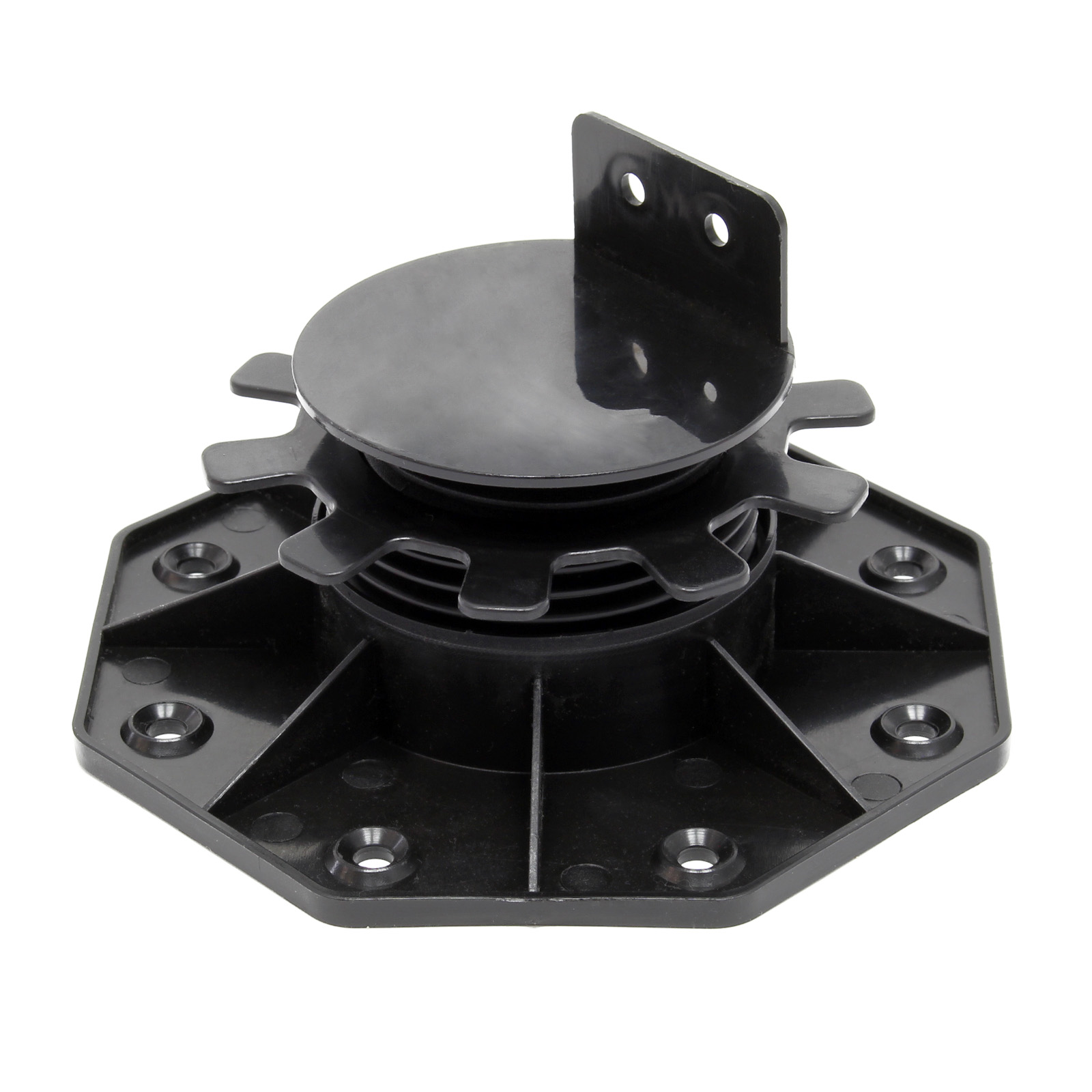
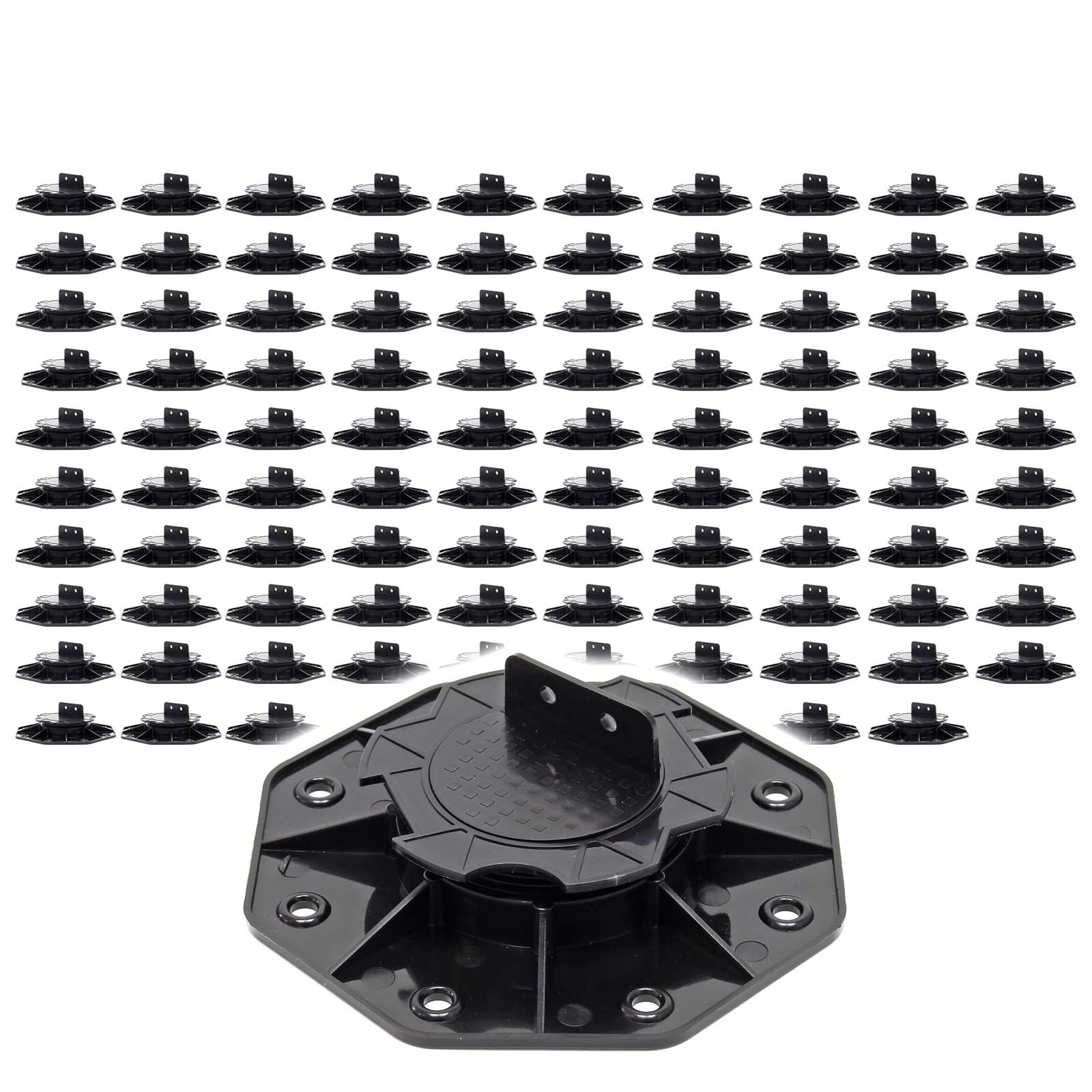
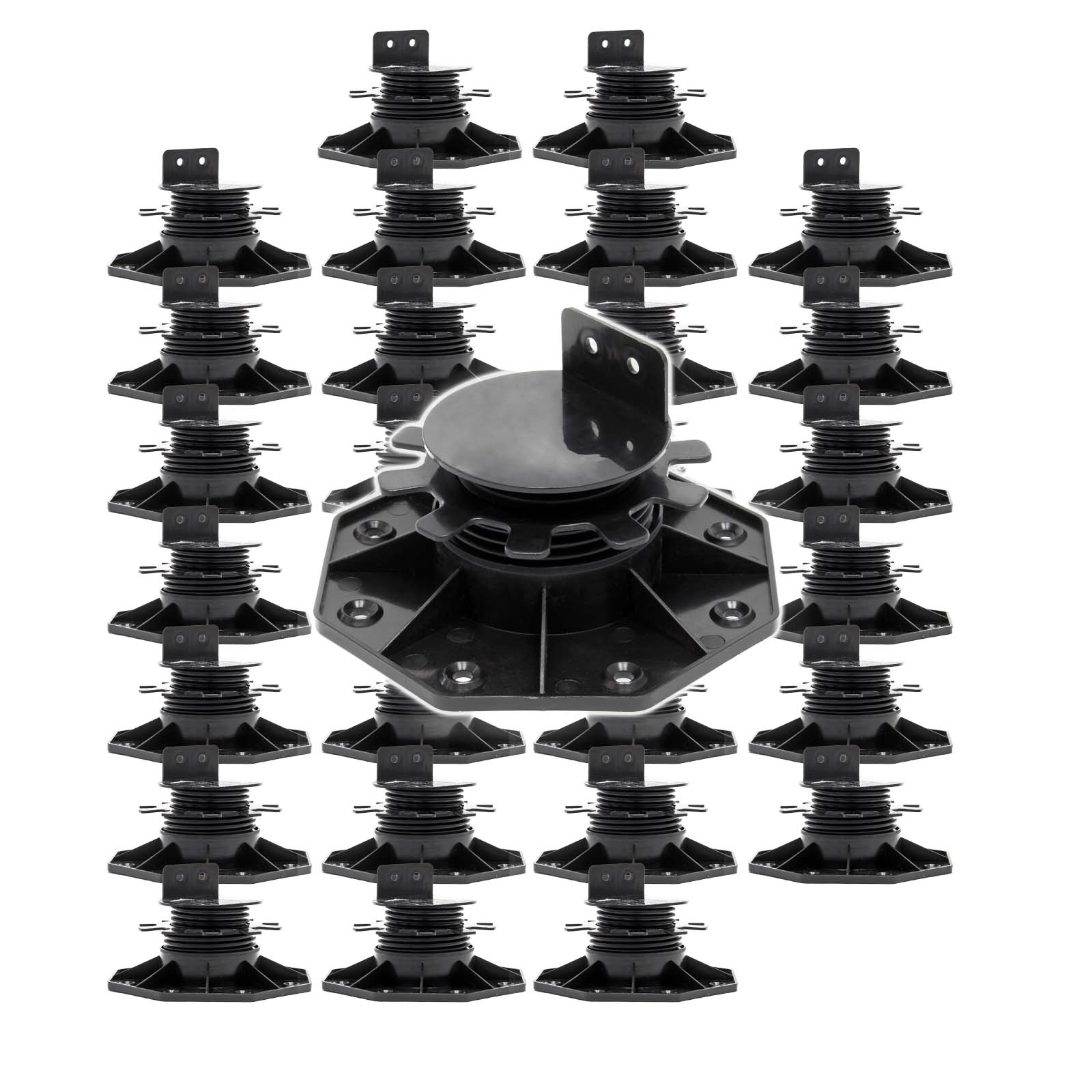
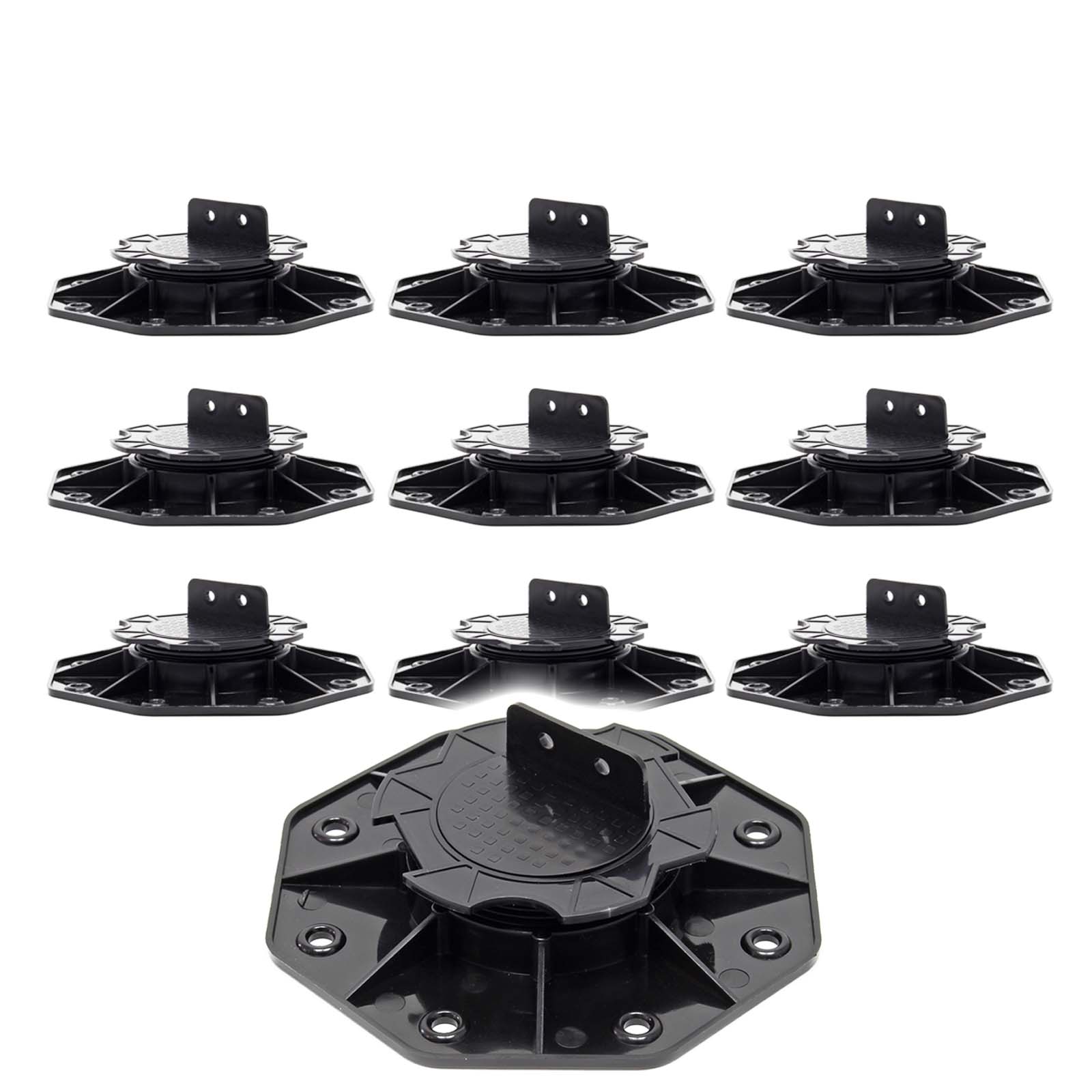
Not all terraces require high supports, which is why compact terrace support feet are essential for many projects. A practical example is a set adjustable in height between 60 and 128 mm, capable of carrying loads of up to 2700 kg. Despite their smaller size, these adjustable pedestal supports provide the same resilience and stability as taller models. They are particularly useful for projects where the terrace surface needs to remain close to the ground, such as patios, courtyards, or extensions connected to existing structures.
Their compact design makes them unobtrusive, yet they still allow precise height adjustment to compensate for minor unevenness in the subsurface. Corner support feet in this category ensure that even edges and borders remain stable, preventing movement and structural weakness over time. These low-rise terrace support feet are ideal for projects requiring accessibility, for example where smooth transitions are needed between indoor and outdoor areas. Despite their discreet appearance, they contribute significantly to the terrace’s structural integrity, ensuring that both light and heavy loads are supported evenly. Their versatility makes them a practical and effective choice for builders seeking compact yet powerful solutions in terrace construction.
What Types of Pedestals Exist for Terraces?
There are several types of pedestals available for terrace construction, each designed for specific applications. Adjustable terrace feet are the most versatile, offering height ranges that allow them to adapt to uneven or sloped ground. They are commonly used in both small residential terraces and large commercial platforms. Fixed-height terrace support feet are a simpler option when the ground is already level, providing quick installation without adjustment features. Corner support feet are specifically developed for edges and structural transitions, ensuring stability where it is needed most.
Some terrace deck support pedestal systems are equipped with slope compensators, which make it possible to build on gradients without additional work. Others integrate rubber pads to reduce vibrations and improve acoustic insulation, particularly in multi-story residential projects. Heavy-duty pedestal supports are designed for industrial or commercial applications, capable of bearing extremely high loads. In contrast, low-profile terrace support feet are suitable for projects that must remain close to ground level. Choosing the right type depends on factors such as the construction site, the type of planking or tiles, and the expected weight loads, ensuring the terrace remains durable and secure in the long term.

How to Support a Sagging Deck?
A sagging deck is a common issue in terrace maintenance, but it can often be corrected without replacing the entire structure. Adjustable pedestal supports provide an efficient solution by lifting and stabilizing the affected areas. By placing terrace deck support pedestal systems under the joists of the sagging section, the decking can be leveled precisely to match the surrounding surface. The threaded or adjustable mechanism allows fine tuning, restoring both functionality and appearance.
This process not only corrects existing problems but also prevents further deterioration, as the load is redistributed evenly across terrace support feet. Unlike rigid foundations, adjustable terrace feet remain adaptable, meaning they can respond to ground movement or soil compression over time. Corner support feet may also be used in sensitive areas to strengthen borders or edges where sagging is more likely. This method is cost-effective, avoids dismantling large portions of the terrace, and extends the structure’s lifespan. Supporting a sagging deck with adjustable terrace feet is therefore a practical and reliable approach that ensures long-term safety and stability while preserving the terrace’s usability for daily activities.
Pedestal versus Plinth: Understanding the Difference
In terrace construction, the terms pedestal and plinth are often confused, but they represent distinct structural concepts. A pedestal, such as an adjustable terrace foot, is a specially designed support that elevates and stabilizes decking structures. It is lightweight, adjustable, and adaptable to uneven terrain. In contrast, a plinth is a solid, usually immovable block made from stone, concrete, or masonry, serving as a permanent base. While plinths offer durability, they lack flexibility and are not easily adapted to changing ground conditions.
Adjustable pedestal supports provide significant advantages in modern terrace construction by allowing fine height adjustments, enabling ventilation beneath decking, and reducing moisture-related damage. Corner support feet, as specialized pedestals, ensure stability at edges and junctions, where plinths cannot offer precise alignment. Pedestals are therefore better suited for projects requiring adaptability, quick installation, and reusability, while plinths are more appropriate in traditional masonry settings. Understanding the distinction helps builders select the most efficient method for supporting terraces, ensuring that each project benefits from the right balance of structural strength, adaptability, and ease of construction.

The number of adjustable deck supports needed for a terrace depends on the overall size, design, and type of surface material. For wooden decking, terrace support feet are usually placed at intervals of 40 to 60 cm under the joists. This spacing ensures that the planks remain firm, preventing bending or deflection.

Large terraces often require dozens of terrace deck support pedestal units to guarantee stability. Weight capacity also plays an important role. When high-capacity corner support feet are used, fewer may be required, as each unit carries heavier loads. However, spacing supports too far apart risks uneven distribution of pressure, leading to instability. Builders therefore position adjustable pedestal supports more densely in areas subject to high foot traffic, such as entrances or around heavy furniture.

The condition of the subsurface also influences planning. On uneven ground, additional terrace support feet may be necessary to maintain alignment and structural safety. A grid layout is often used to mark exact positions before installation. This ensures even distribution of adjustable terrace feet, resulting in a secure and durable terrace surface that withstands long-term use without deformation or sagging.
Summary of Terrace Construction
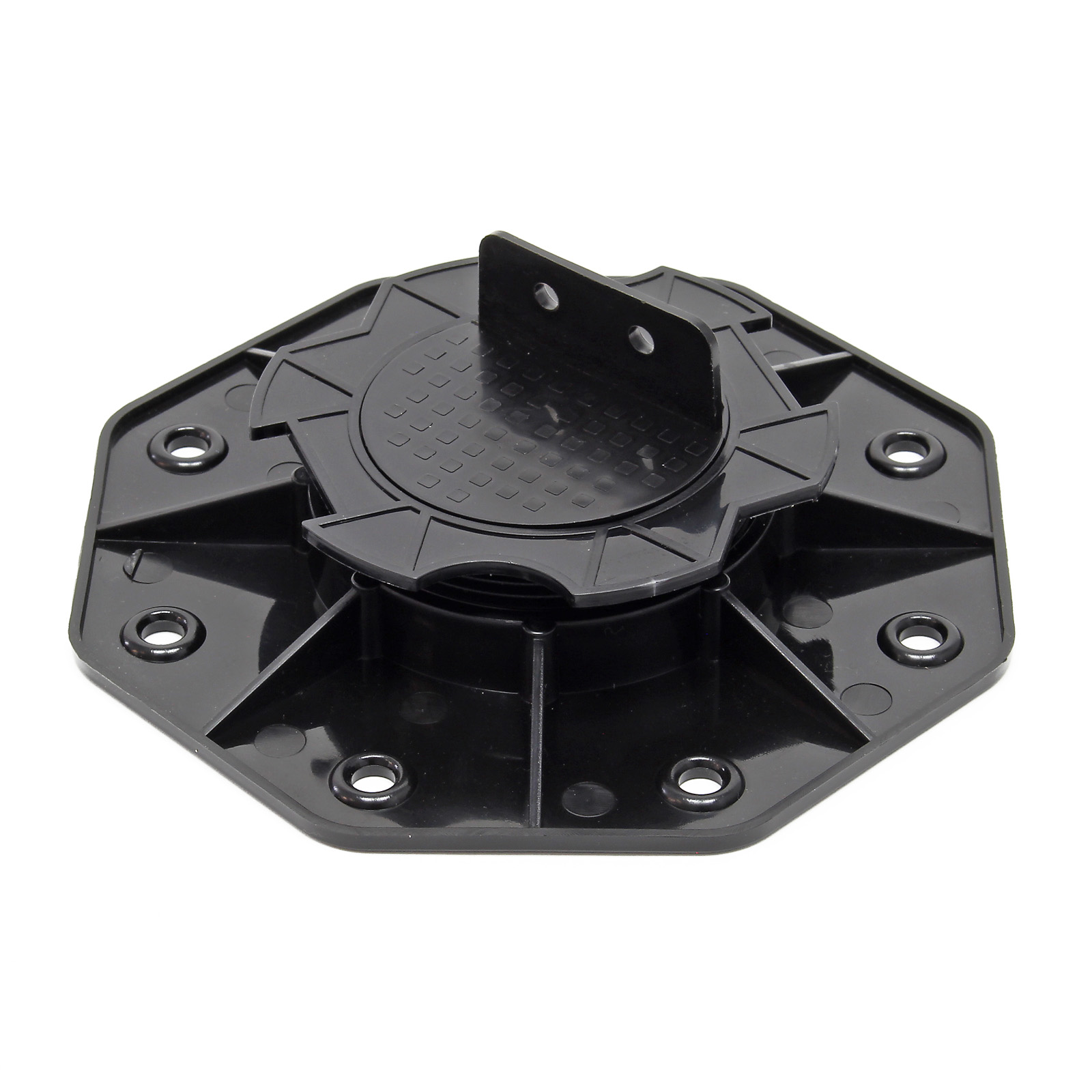
Terrace construction relies on precision, adaptability, and durable foundations. Terrace deck support pedestal systems, adjustable terrace feet, and corner support feet provide the structural basis for safe, long-lasting outdoor platforms. Their adjustability ensures that surfaces remain level, even on uneven or sloping ground. By distinguishing between pedestals and plinths, understanding the types of supports available, and correctly calculating the number of adjustable deck supports required, builders can design terraces that combine strength with flexibility.
Pedestal supports also address maintenance challenges, such as sagging decks, by offering corrective solutions without dismantling entire structures. Compact terrace support feet ensure stability in low-rise projects, while heavy-duty options handle significant loads in large-scale constructions. Whether in private gardens, urban rooftops, or commercial spaces, adjustable pedestal supports create terraces that remain functional, secure, and visually appealing. In summary, terrace support systems make it possible to achieve both aesthetic and structural goals, ensuring outdoor areas remain safe, durable, and adaptable for years to come.